
Remote Bookkeeping Services in Al Jahra, Kuwait
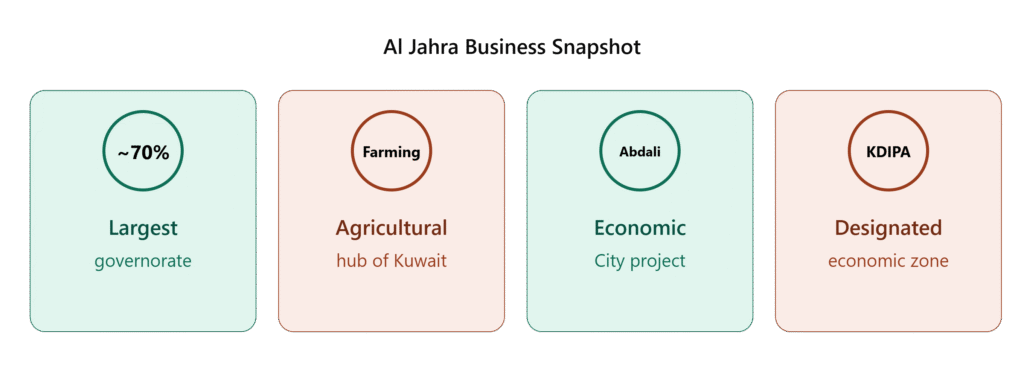
Al Jahra is Kuwait’s largest governorate by land area, covering roughly 70% of the country’s territory, and has been Kuwait’s principal agricultural region for generations — sustained by natural groundwater that supports vegetable and date farming in an otherwise arid landscape. Beyond agriculture, Al Jahra is also where Kuwait is placing serious long-term investment: the Abdali Economic City project, backed by a KDIPA-designated economic zone, represents billion-dinar ambitions for the north of the country. That combination of traditional farming businesses and emerging economic-zone development makes Al Jahra one of the more distinct business environments in Kuwait.
MHK & CO LLP provides remote bookkeeping services in Al Jahra for both sides of this economy — agricultural producers and suppliers, and the contractors and businesses building out Abdali Economic City.
Why Al Jahra Businesses Need a Different Bookkeeping Approach
An agricultural producer in Al Jahra deals with seasonal harvest cycles, perishable inventory, and revenue that can swing significantly from one season to the next — nothing like the flat monthly assumptions most bookkeeping templates are built around. A contractor or supplier working on Abdali Economic City, meanwhile, needs project-based cost tracking similar to any large-scale development, with the added complexity of KDIPA economic zone reporting where it applies. Treating both as generic small businesses misses what actually drives their numbers.
Common Bookkeeping Problems We Fix in Al Jahra
The most frequent issue among Al Jahra’s agricultural businesses is harvest revenue and input costs — seed, feed, irrigation, labour — being tracked loosely or seasonally rather than being reconciled into the accounting system as they occur, which makes it difficult to know true margin by crop or by season. For contractors and suppliers connected to Abdali Economic City projects, the recurring problem is costs being booked against the company overall rather than against the specific contract or phase, which hides which work is actually profitable. We rebuild the chart of accounts around whichever of these applies to the business.
What Our Remote Bookkeeping Service in Al Jahra Includes
- Daily or weekly transaction recording via cloud accounting software
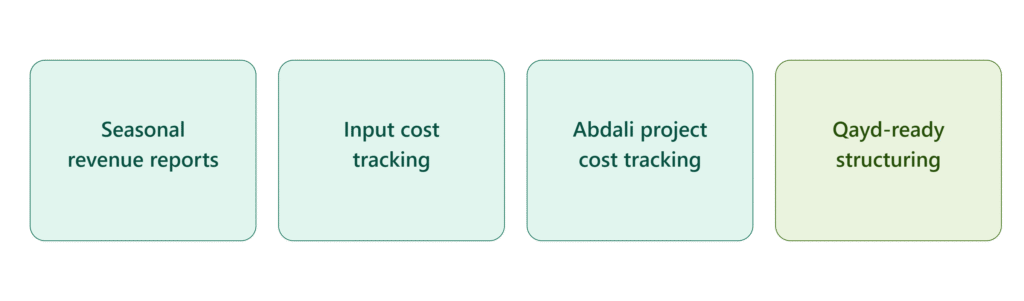
- Seasonal revenue and cash flow reporting for agricultural producers
- Input cost tracking — seed, feed, irrigation, and labour — tied to production cycles
- Project and contract-level cost tracking for Abdali Economic City suppliers and contractors
- Separation of Kuwait-sourced and offshore income for corporate income tax purposes
- Qayd XBRL-ready record structuring ahead of the 2027 mandatory deadline
- Monthly management reports (P&L, balance sheet, cash flow summary)
Corporate Tax and Regulatory Compliance in Al Jahra
Kuwait has no VAT, so Al Jahra businesses have no VAT registration or filing obligation. What applies instead is the standard 15% corporate income tax on Kuwait-sourced profits for foreign-owned entities, while wholly Kuwaiti and GCC-owned agricultural businesses are typically exempt. Businesses operating within KDIPA-designated economic zones such as Abdali should also confirm their specific zone reporting obligations, since incentive eligibility can depend on maintaining proper accounting records. From 1 January 2027, Qayd XBRL financial filing becomes mandatory nationwide.
Industries We Serve in Al Jahra
Our Al Jahra clients include agricultural producers and livestock operations, agricultural equipment and supply companies, contractors and subcontractors connected to Abdali Economic City development, and general trading businesses serving the governorate’s rural and growing urban population — each with bookkeeping structured around how that business actually earns and spends.
Why Choose MHK & CO LLP for Remote Bookkeeping in Al Jahra
We combine seasonal agricultural bookkeeping experience with project-based cost tracking for economic-zone development work, built on Kuwait’s actual compliance framework rather than a generic template. If your business also operates in Kuwait City, Hawalli, Al Ahmadi, Farwaniya, Mubarak Al-Kabeer, or Salmiya, Fahaheel, or Jleeb Al-Shuyoukh, or elsewhere in the GCC such as Bahrain or Oman, we consolidate bookkeeping across all your locations under one reporting structure. See our Kuwait overview page for the full picture of our coverage.
FAQs
Do agricultural businesses in Al Jahra need VAT bookkeeping?
No. Kuwait has not implemented VAT — your obligations depend on ownership structure and corporate income tax instead.
Can you track seasonal revenue for a farm or livestock operation?
Yes, we build reporting around your actual harvest and production cycle rather than a flat monthly average, so seasonal planning is realistic.
Do businesses in Abdali Economic City have special reporting requirements?
Depending on KDIPA zone designation, yes — we help confirm and structure records to satisfy both zone-specific and standard national requirements.