
Remote Bookkeeping Services in Al Ahmadi, Kuwait
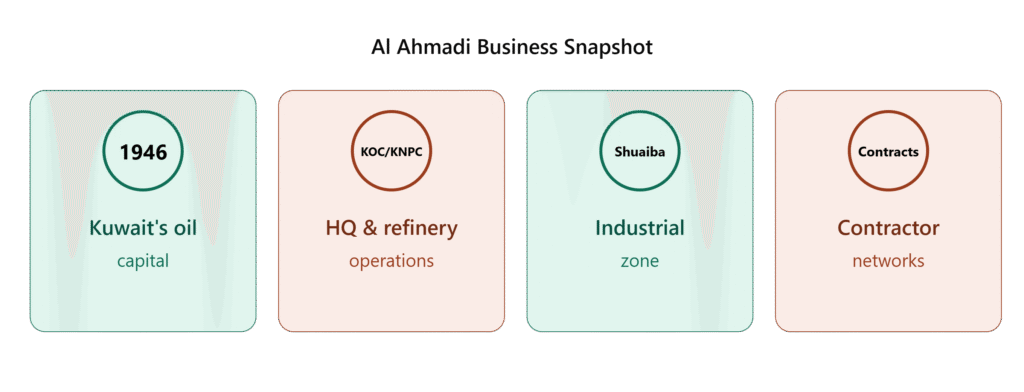
Al Ahmadi is Kuwait’s oil capital — founded in 1946 after the discovery of oil, and today home to the headquarters of Kuwait Oil Company and Kuwait National Petroleum Company, along with the Mina Al-Ahmadi refinery and the Shuaiba industrial zone. The businesses operating here are overwhelmingly contract-driven: oilfield service providers, EPC contractors, equipment suppliers, maintenance and shutdown specialists, and the long chain of subcontractors that sits beneath them. Almost all of them face the single compliance issue that defines doing business in Al Ahmadi — tax retention on contract payments.
MHK & CO LLP provides remote bookkeeping services in Al Ahmadi built for this contract-driven environment, with project-level cost tracking and retention handling built in from the start.
Why Al Ahmadi Contractors Need Retention-Aware Bookkeeping
Kuwaiti payers commonly hold back a portion of contract payments to foreign contractors — around 5% in practice — until tax clearance is produced. For a contractor running several concurrent projects with KOC, KNPC, or a main contractor, these retentions accumulate into a significant receivable that is easy to lose track of and difficult to recover if it was never recorded properly at the time. Combined with the 15% corporate income tax on Kuwait-sourced profits for foreign-owned entities and an instalment-based payment calendar, Kuwait’s tax administration is hands-on rather than a once-a-year formality — which makes contemporaneous bookkeeping essential rather than optional.
Common Bookkeeping Problems We Fix in Al Ahmadi
The biggest issue we see among Al Ahmadi contractors is costs being booked against the company as a whole instead of against the specific project, work order, or shutdown they belong to — which makes it impossible to know which contracts are actually profitable until it’s too late to act. The second is retentions being treated as a simple shortfall in payment rather than being recorded as a recoverable receivable pending tax clearance, which quietly understates assets and makes recovery harder. We rebuild the chart of accounts so both are visible every month.
What Our Remote Bookkeeping Service in Al Ahmadi Includes
- Project and work-order level cost tracking
- Contract retention tracking and reconciliation against tax clearance status
- Subcontractor invoice and payment tracking
- Separation of Kuwait-sourced and non-Kuwait income for corporate income tax purposes
- Joint venture and consortium cost allocation
- Qayd XBRL-ready financial record structuring ahead of the 2027 mandatory deadline
- Monthly project margin and cash flow reporting
Corporate Tax and Regulatory Compliance in Al Ahmadi
Kuwait has no VAT, so contractors here have no VAT registration or filing obligation. What does apply is a flat 15% corporate income tax on Kuwait-sourced profits for foreign-owned entities, alongside the retention mechanism on contract payments. Kuwait’s tax authority also examines offshore contracts connected to Kuwait activities when assessing taxable profit, which matters particularly for international contractors splitting scope between onshore and offshore entities. Multinational groups above EUR 750 million in consolidated revenue fall under the 15% Domestic Minimum Top-Up Tax instead, effective from fiscal years starting 1 January 2025.
Industries We Serve in Al Ahmadi
Our Al Ahmadi clients include oilfield service companies, EPC and maintenance contractors, industrial equipment suppliers, Shuaiba-based manufacturers and processors, and logistics and manpower subcontractors supporting refinery and field operations — each with cost tracking that matches how contract-based work actually gets paid.
Why Choose MHK & CO LLP for Remote Bookkeeping in Al Ahmadi
We understand both the project-cost reality of oil-sector contracting and the specific mechanics of Kuwait’s retention and corporate income tax framework, so Al Ahmadi contractors get books that support tax clearance rather than complicating it. If your business also operates in Kuwait City, Hawalli, Farwaniya, Al Jahra, Mubarak Al-Kabeer, or Salmiya, Fahaheel, or Jleeb Al-Shuyoukh, or elsewhere in the GCC such as Bahrain or Oman, we consolidate bookkeeping across all your locations under one reporting structure. See our Kuwait overview page for the full picture of our coverage.
FAQs
How should contract retentions be recorded in my books?
As a recoverable receivable pending tax clearance, tracked per contract — not as a simple payment shortfall, which understates your assets and makes recovery harder.
Can you track costs separately for each project or shutdown?
Yes, our chart of accounts reports cost and margin at the project or work-order level, not just company-wide.
Do oil sector contractors in Kuwait need to handle VAT?
No. Kuwait has not implemented VAT — corporate income tax on Kuwait-sourced profits and the retention mechanism are the obligations that actually apply.